

POLICY PRIORITIES FOR SCALING ENERGY STORAGE AT EUSEW 2026
Air4NRG, as part of the LDES Cluster, joined EU policymakers and industry leaders at EUSEW 2026 to discuss how to unlock the full potential of energy storage. The session highlighted the urgent need for technology-neutral regulation, improved market design, and stronger investment conditions to enable long-duration energy storage to move from innovation to large-scale deployment.
On 9 June in Brussels, Air4NRG, as part of the LDES Cluster, successfully contributed to a high-level policy session at the EU Sustainable Energy Week (EUSEW) 2026, bringing together policymakers, industry representatives and experts to address the regulatory and market barriers slowing the deployment of energy storage in Europe.
The discussion confirmed a broad consensus: while energy storage technologies are rapidly advancing and increasingly essential for integrating renewable energy, current market and regulatory frameworks are not yet adapted to fully capture their value. Speakers stressed that storage provides a wide range of critical services, including grid stability, congestion management and long-duration energy shifting, many of which remain under-recognised and under-remunerated.
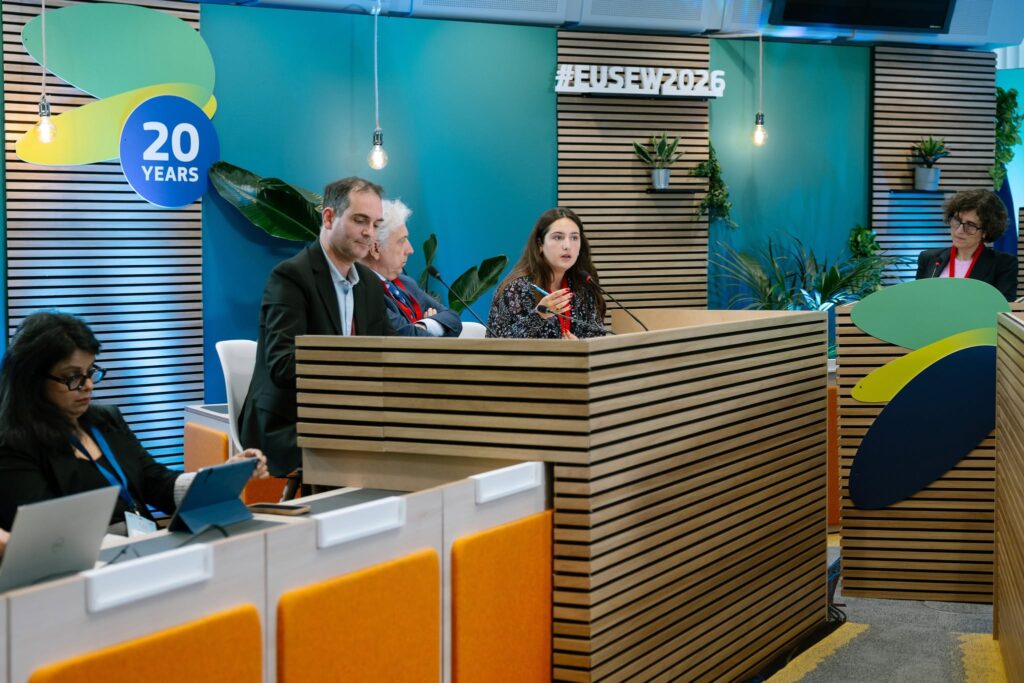
A central message emerging from the session was the urgent need to move beyond supporting innovation alone and to establish stable, technology-neutral regulatory and market conditions that enable large-scale deployment. Long-duration energy storage (LDES) was identified as a key element of Europe’s future energy system, capable of supporting security of supply, reducing price volatility and ensuring system reliability during periods of low renewable generation.
María Méndez (AIR4NRG / LDES Cluster) also underlined that LDES is not a single technology but a family of complementary technologies addressing different storage needs. Preserving this technological diversity through neutral policy frameworks will be essential for an efficient and resilient energy transition.

Several barriers to deployment were discussed, including limited access to grid connections, complex permitting procedures and insufficient long-term revenue certainty for investors. The lack of a clear regulatory definition for LDES at European level further contributes to uncertainty. At the same time, growing competition for grid access and evolving market risks are shifting the focus from technological readiness to economic viability.
From an industrial and system perspective, speakers emphasised that storage must be integrated into grid planning, renewable deployment and electrification strategies. Coordinated planning, simplified permitting and stable remuneration mechanisms were identified as key enablers to unlock investment and accelerate deployment.
The session also reinforced the role of demonstration projects such as AIR4NRG in bridging the gap between innovation and market uptake. By advancing isothermal compressed air energy storage (I-CAES), AIR4NRG is contributing to the development of flexible, scalable solutions ready to support Europe’s climate and energy objectives.
The key takeaway from the discussion was clear: Europe already has promising energy storage technologies. The next step is to ensure that regulatory frameworks, market design and investment conditions evolve quickly enough to allow these solutions to move from demonstration to widespread commercial deployment.
